





Reviewed by the clinical team at Wilson House Dental Practice.
Bad breath that lingers can be difficult to ignore. It can affect confidence, make social situations uncomfortable, and leave you wondering whether the cause is something minor or something that needs attention. A temporary change in breath after strong food, coffee, or waking up is common. Breath that keeps returning, even when you are brushing regularly, is different.
At Wilson House Dental Practice, we often see patients who assume bad breath must be coming from the stomach, when the more likely explanation is somewhere in the mouth. In many cases, persistent bad breath is linked to plaque build-up, gum irritation, trapped food, tongue coating, dry mouth, or a problem around a tooth, restoration, or dental appliance.
Bad breath, also known as halitosis, is usually caused by bacteria breaking down food debris and other material inside the mouth. This process can release unpleasant-smelling compounds, especially when plaque is allowed to sit along the gumline, between the teeth, or on the tongue. The Oral Health Foundation explains bad breath as something commonly caused by bacteria coating the teeth, gums, and tongue, as well as bits of food trapped in the mouth.
That is why the mouth is usually the first place to investigate. People often suspect reflux or another digestive issue, but persistent bad breath is often easier to explain by looking at oral hygiene, gum health, restorations, and anything that may be trapping debris.
Plaque is one of the most common contributors to bad breath. If it is not removed properly, bacteria continue to thrive, and odour can linger no matter how often you use mints or mouthwash.
This is especially common when brushing is reasonably good, but cleaning between the teeth is inconsistent. If food debris and plaque are left in those tighter spaces, the mouth never quite becomes as clean as it needs to be.
Persistent bad breath can be an early sign of gum disease. When the gums are inflamed, bacteria can collect more easily around the gumline and in deeper pockets, creating a smell that tends to keep returning.
Other clues may include:
The Oral Health Foundation’s gum disease guidance notes that bad breath, a bad taste, swollen gums, and bleeding when brushing can all be signs of gum problems.
The tongue is often overlooked in home care routines. Even when the teeth are brushed well, bacteria, food particles, and dead cells can collect on the surface of the tongue, especially towards the back. That coating can be a major source of odour.
This is one reason people sometimes say, “I brush twice a day, and my breath is still not right.” The brushing may be happening, but the whole mouth is not being cleaned effectively.
Some areas of the mouth are simply better at trapping debris than others. Crowded teeth, worn fillings, gum recession, bridges, and certain restorations can all create small spaces where food repeatedly gets caught. If this keeps happening in the same place, bad breath may follow.
Sometimes there is no obvious pain at all. It may simply present as a repeated smell or bad taste that never quite settles.
A decayed tooth, a leaking filling, or a hidden infection can all contribute to persistent bad breath. In some cases, there may also be sensitivity, soreness, or a noticeable unpleasant taste. In others, the smell is one of the first things a patient notices.
This is one reason ongoing bad breath should not just be covered up and ignored. If there is an underlying dental cause, the smell is often only the messenger.
Saliva helps wash away debris and bacteria. If your mouth is dry, that natural cleansing effect is reduced, and odour can become more noticeable. Dry mouth may be linked to mouth breathing, certain medications, dehydration, smoking, or sleeping with the mouth open.
A dry mouth can make bad breath more stubborn because the environment inside the mouth becomes more favourable for bacterial build-up.
Appliances worn in the mouth can also collect biofilm and debris if they are not cleaned thoroughly. Even when natural teeth are being brushed properly, a poorly cleaned denture, retainer, or mouth guard can still be a source of odour.
This is especially likely if the appliance is stored while damp or only rinsed instead of cleaned properly.
If bad breath is coming from the mouth, there are often other clues nearby.
|
Possible clue |
What it may suggest |
|
Bleeding when brushing |
Gum inflammation or plaque build-up |
|
Bad taste that keeps returning |
Bacteria, trapped food, or infection |
|
One area always traps food |
Crowding, gum recession, or a restoration issue |
|
Dry or sticky mouth |
Reduced saliva flow |
|
Cloudy or dirty dental appliance |
Bacterial build-up on the appliance |
|
Swollen or sore gums |
Early gum disease or irritation |
A table like this cannot diagnose the cause on its own, but it can help you spot whether the issue is likely to be dental rather than random or food-related.

If the problem is recent and mild, it is reasonable to review the basics before assuming the worst.
A useful daily routine usually means:
If one of those is being missed, that may be enough to explain why breath freshness is not improving. If cleaning between the teeth is the weak spot, our guide on how to floss your teeth properly is a practical place to start.
Mouthwash can freshen the mouth temporarily, but it does not remove plaque, trapped debris, or calculus. If the source of the smell is still present, the improvement is often short-lived.
Bleeding gums are not something to shrug off as normal. The NHS guidance on gum disease says to see a dentist if your gums bleed when you brush, are painful and swollen, or if you have bad breath.
If bad breath does not improve after a few weeks of good self-care, it is sensible to have it checked. A dental assessment can help identify whether the source is:
This is where professional hygiene support is especially relevant. Our dental hygiene treatment page explains how we support patients with plaque removal, gum care, and practical advice for maintaining a cleaner, healthier mouth.
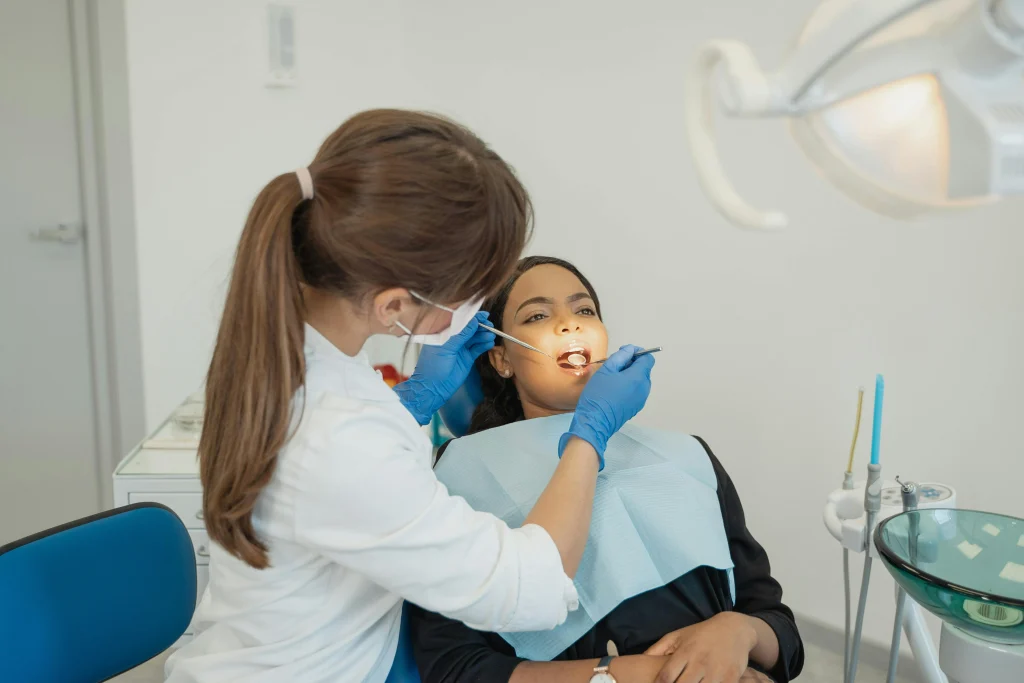
Not all bad breath begins in the mouth, and it is important not to overstate what dental care can solve. Sinus problems, throat infections, reflux, medication-related dry mouth, and some medical conditions can also play a part.
That said, the dental causes are common and often easier to check first. If the mouth appears healthy and the problem still continues, that may be the point where medical advice becomes the next sensible step.
Bad breath that will not go away is often linked to oral health rather than simply food or digestion. Plaque build-up, gum disease, tongue coating, dry mouth, trapped food, tooth decay, and poorly cleaned appliances are all dental causes worth considering.
The important thing is not to keep guessing. If bad breath is returning despite good efforts at home, it is worth having the mouth examined properly.
If bad breath persists or if you also have bleeding gums, pain, or concerns about a tooth, restoration, or dental appliance, contact us, and we will be happy to advise you.
Yes. Gum disease can allow bacteria to build up around the gumline and is a common dental cause of persistent bad breath.
Brushing may not remove bacteria from the tongue or debris between the teeth. Ongoing bad breath can also point to gum disease, dry mouth, or a dental problem that needs checking.
Yes, it can. Tooth decay can trap bacteria and debris, which may cause an unpleasant smell or bad taste.
They can if they are not cleaned properly. Appliances worn in the mouth can collect biofilm and debris over time.
It is sensible to book an appointment if it has not improved after a few weeks of good home care, or if you also have bleeding gums, pain, or denture problems.
< Back to Blog